
Introduction: The Factory Floor Is Getting Smarter
Machines have been connected to the internet for years. But connected is not the same as intelligent. Traditional IoT systems collect data — AI IoT systems act on it. The shift from 'sensors that report' to 'systems that predict and respond' is redefining what's possible in industrial automation.
What Is AI-Integrated IoT?
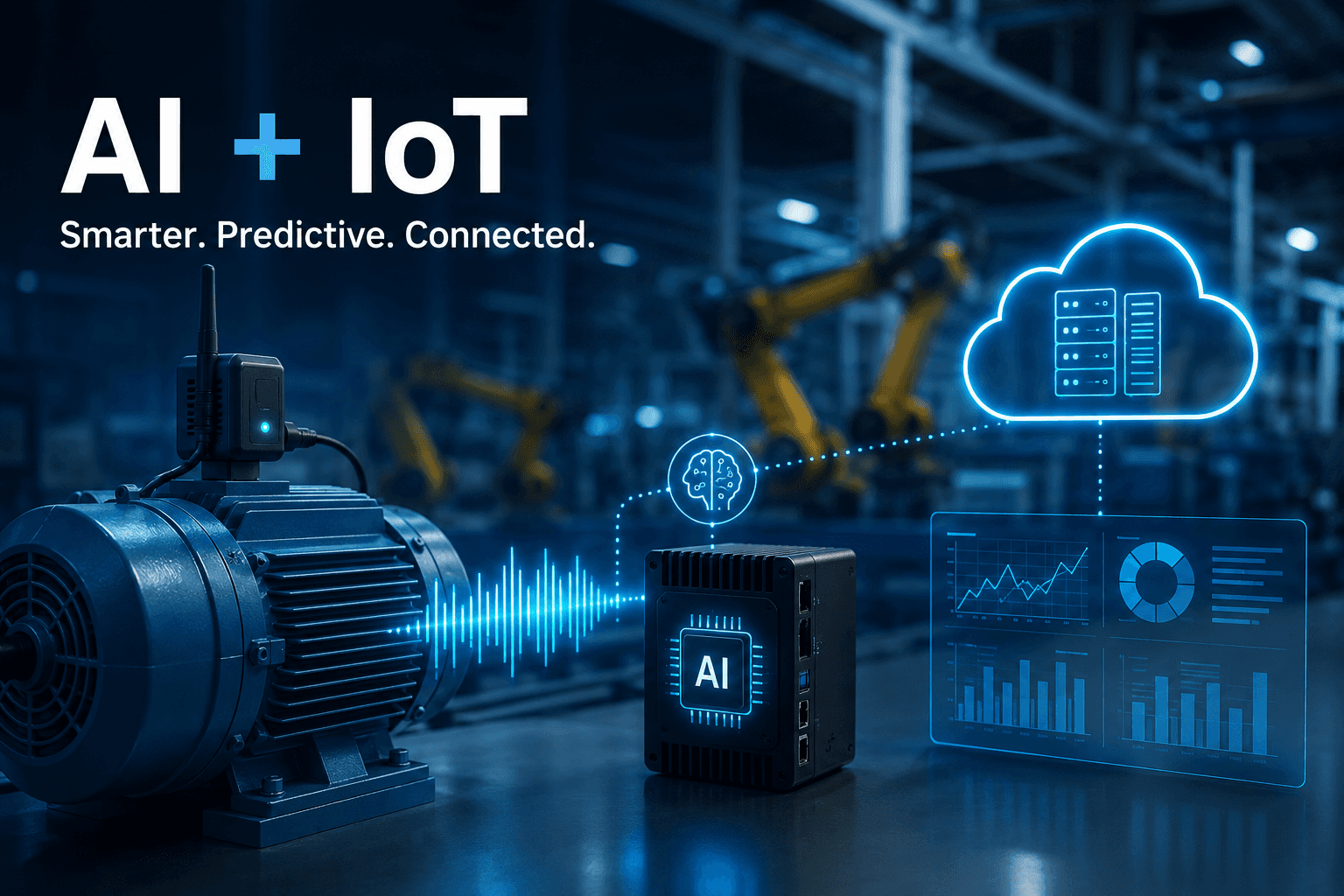
AI-integrated IoT (or AIoT) combines the connectivity of IoT hardware with the reasoning power of AI models. Instead of a sensor sending raw data to a dashboard for a human to interpret, an AIoT system analyzes the data in real time - detecting anomalies, predicting failures, and triggering automated responses - often at the edge, before the data even reaches the cloud.
Key Applications of AI in IoT Systems
Predictive Maintenance
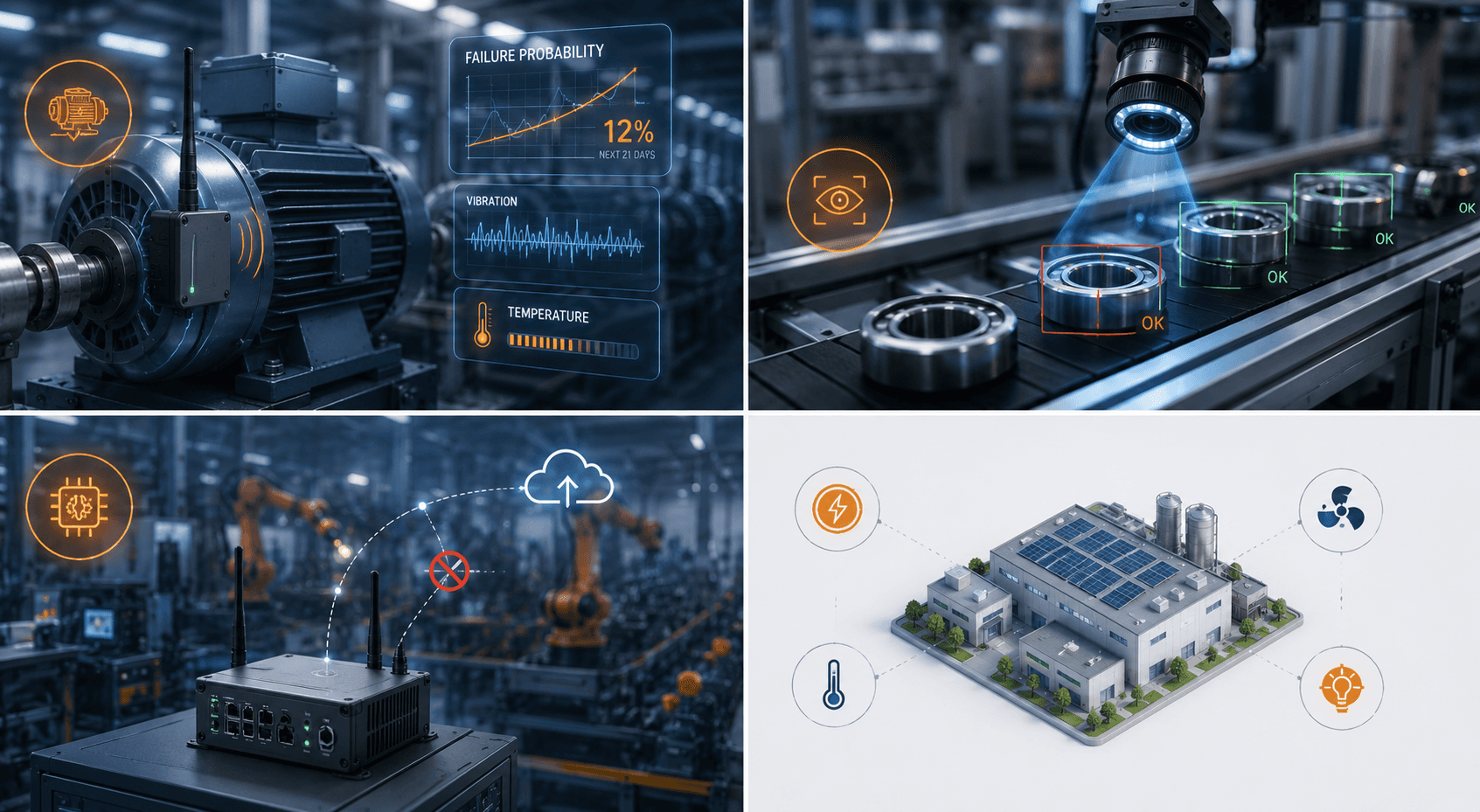
Traditional maintenance is either reactive (fix it when it breaks) or scheduled (replace it every X months regardless of condition). AI-powered predictive maintenance uses sensor data - vibration, temperature, sound, pressure - to forecast exactly when a component will fail and service it just in time.
• Reduces unplanned downtime by up to 50%
• Extends equipment life by avoiding over-maintenance
• Dramatically cuts maintenance cost per asset
Smart Infrastructure Management
In commercial real estate, smart cities, and large campuses, AIoT systems manage energy consumption, access control, environmental conditions, and security - adapting in real time based on occupancy patterns and external factors.
Edge Computing with AI
Edge AI processes data directly on the device or local gateway — not in a distant cloud server. This enables real-time responses in latency-sensitive environments (think autonomous vehicles, surgical robots, or live quality inspection on a production line) where milliseconds matter.
How Palpx.ai Builds AI-IoT Systems
Our AIoT engineering practice brings together hardware integration, model development, and full-stack software. A recent project involved deploying AI-powered vibration sensors across a manufacturing facility to predict motor failures. We:
• Deployed edge AI modules at each machine for real-time analysis
• Built anomaly detection models trained on 18 months of historical sensor data
• Created a maintenance dashboard with failure probability scores per asset
• Integrated the system with the client's existing CMMS for automated work order creation
The result: a 60% reduction in unplanned downtime in the first six months.
Challenges in AI-IoT Implementation (And How to Solve Them)
• Data quality: Sensor data is often noisy. Robust preprocessing is non-negotiable.
• Connectivity: Edge systems must be designed to work reliably offline.
• Security: Every connected device is a potential attack surface — zero-trust architecture matters.
• Scalability: Systems designed for 50 sensors need to handle 5,000 without a rebuild.
Conclusion: The Competitive Advantage Is Already Being Built
Organizations that deploy AI-IoT systems today are not just improving efficiency - they're building operational intelligence that compounds over time. The data collected, the models refined, and the workflows optimized create a competitive moat that's hard to replicate.